All News

Candida Auris – What you need to know.
UNC Charlotte expert shares what you need to know about Candida auris The United States is seeing a rapid increase of cases of Candida auris, a fungus found in health care facilities, according to the U.S. Centers for Disease Control and Prevention. Morgan Carter, assistant professor in the Klein College of Science, answered questions about the fungus […]

Bioinformatics and genomics expert shares insights on the cyclosporiasis outbreak.
As federal and state health officials continue investigating one of the nation’s largest recorded cyclosporiasis outbreaks, questions remain about how the parasite spreads, why identifying contaminated food sources is so challenging and what advances in genomics and bioinformatics could mean for future outbreak detection. Carol Grotnes Belk Distinguished Professor of Bioinformatics and Genomics and codirector […]
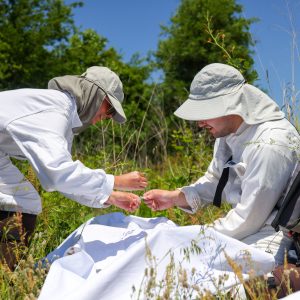
The Tick Hunters
UNC Charlotte research team expands tick surveillance through field work and lab expertise to improve public health in Mecklenburg County It’s 90 degrees in the open fields of Cowan’s Ford Wildlife Refuge in northwestern Mecklenburg County, North Carolina. All sun, no breeze. The students — on this day it’s one from public health, two from […]
NC ASM Meeting
Please Save the Date for the NC ASM Meeting here at UNC Charlotte on October 10th! UNC Charlotte will be hosting the NC ASM meeting that focuses on all things microbes here at UNC Charlotte this fall. Please mark your calendars for October 10th! (Yes, that is over fall break!!) We are excited to showcase the research […]
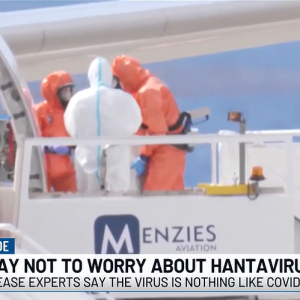
‘Not to worry’: North Carolina health leaders say hantavirus is not COVID
CHARLOTTE, N.C. (WBTV) – Global health leaders are warning the number of positive hantavirus cases tied to an outbreak on a cruise ship could rise, but infectious disease experts in North Carolina say residents should not be alarmed. Dr. Dan Janies from the CIPHER Center at UNC Charlotte , weighed in on the conversation with WBTV. View […]

Ready or not, AI is being integrated into healthcare in NC and nationwide
In North Carolina, the AI tech has been used for everything from diagnosing lung disease to drafting messages from your doctor. In a recent edition of Charlotte Talks With Mike Collins | on NPR’s WFAE 90.7, we sit down with two experts about the latest advances in AI and medicine in North Carolina and nationwide. GUESTSDan Janies, […]

Shivani Patel was selected for Wake Forest’s Cardiovascular Sciences Summer Research Program
The Cardiovascular Sciences Summer Research Program is an opportunity for undergraduate students to gain research experience during the summer months. The program includes research training in the cardiovascular sciences with mentoring by medical school faculty.
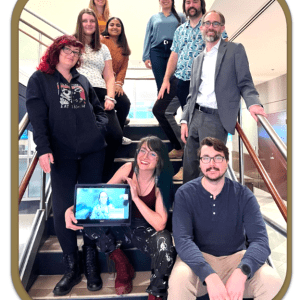
Reitzel Lab Awarded Collaborative 1.5M NSF Award
Congratulations to Adam Reitzel Ph.D on his new award from NSF/BIO-UKRI/BBSRC “The role of gene copy number variation in host-microbe interactions”. It is a 4-year grant ($1.5M total, $650K to UNC Charlotte) and is a collaborative project with a UK partner. With funding from the National Science Foundation, the Reitzel lab will use a coastal sea anemone […]
Luo Lab awarded a new grant from the National Science Foundation
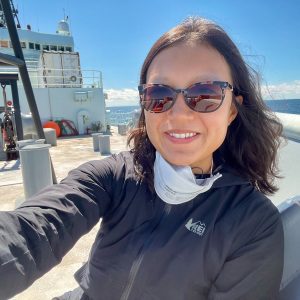
Biological Sciences Professor and Researcher, Dr. Elaine Luo was awarded $699k from NSF for a project to study the “Viral impacts on microbial carbon cycling at deep-sea hydrothermal vents”. This project aims to identify the diversity, mechanisms, and rates of virus-induced carbon cycling in a deep-sea hydrothermal vent system (Axial Seamount). While chemoautotrophic microbes are […]
$5 million NSF grant to expand STEM pathways to UNC Charlotte for community college students
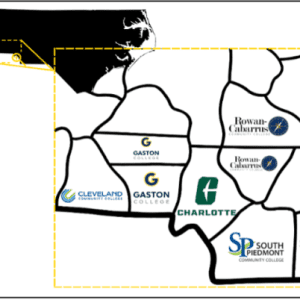
UNC Charlotte has received $2 million as part of a $5 million grant from the National Science Foundation to expand a successful regional partnership that strengthens STEM pathways for academically talented, low‑income students. The new award builds on the earlier SPARC 4 initiative and launches SPARC 6, a five‑institution collaboration designed to improve retention, transfer […]