Artificial Intelligence
Daniel Janies (djanies@charlotte.edu) and Colby Ford (colby.ford@charlotte.edu):
In the CIPHER center, we are using AI in our work on 3D protein structure model and design and to accelerate the extraction of value from large datasets. In the past, protein structure calculations required brute force calculations to optimize the thermodynamics of a structure or laborious biochemical work to empirically determine the structure. Large databases of protein structures were accumulated over the decades. Moreover, genomic sequencing has been applied to most of the proteins in many species, which also has created giant databases.
Now, with AI, we leverage these databases to generate new structures based on the search for evolutionary conserved regions of the protein and any differences that may alter the structure of the protein. In CIPHER, we use these tools to predict the behavior of newly evolved viral variants with mutated proteins. For example, we were able to rapidly predict that the Omicron variant of SARS-CoV-2 would cause breakthrough infections. Next we predicted that the updated vaccines were effective against subsequent mutated descendants of Omicron.
More simply, we were correct in the case of prediction of a severe event and in the case of prediction of a non severe event.
https://inside.charlotte.edu/news-features/2023-02-16/advanced-computing-unc-charlotte-indicates-current-antibodies-effective
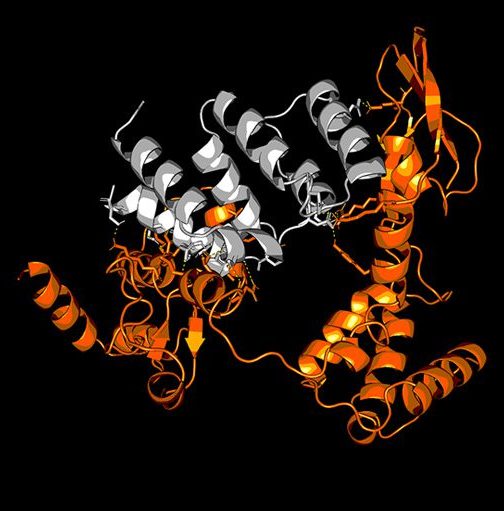
In similar work on “avian” influenza (H5N1), we have shown why the virus is no longer restricted to birds but rather can infect cows and humans. Using AI, we showed that H5N1’s proteins are adapting to enter host cells of many animals wild and domestic. We also show that once inside the cell H5N1’s proteins are getting better at shutting down the cells’ innate immune system.
Aside from protein structure, we can also work much more efficiently by using AI to query the scientific literature. For example, in H5N1 we have performed some new analyses to show how the proteins of the virus are reshuffled evolutionarily. This reshuffling often creates new genomic configurations that potentiate outbreaks. Once we develop hypotheses on which viruses have been reshuffled we use AI to read hundreds of reports to see if we are on track with our new methods. When we validate the methods we can focus the analyses into other less well studied viruses than influenza to detect and warn of dangerous reshuffled viruses that can lead to the next epidemic or pandemic.
Next, our teams are working on generative AI models for novel drug design.This includes the peleke-1 suite of antibody language models for targeted antibody generation and additional diffusion models for protein binder optimization. In practical terms this means we can design novel therapeutic antibodies when a pathogenic or toxic threat presents itself. With AI and high- performance computing, this work can be done at speed and scale.
Denis Jacob Machado(dmachado@charlotte.edu)
Jacob Machado is spearheading efforts to integrate AI to phylogenetics and prepare graduate programs for AI including these efforts:
We are building an AI-Ready Workforce. We are pioneering efforts to ensure the next generation of scientists is “AI-ready.” Through research supported by the College of Computing and Informatics (CCI), we have integrated generative AI into our bioinformatics curriculum, ensuring our graduates can use these tools responsibly and effectively to solve global health challenges.
We are decoding evolutionary relationships. Beyond looking at single viruses, we use revolutionary AI strategies to understand the complex evolution of host-parasite associations. This allows us to map how diseases jump between species, providing a clearer picture of the “evolutionary arms race” between pathogens and their hosts.
We are predicting viral “reshuffling”. In partnership with the Brazilian National Computing Labs (LNCC), we are applying AI to detect genomic recombination — a process where different viral strains “reshuffle” their genetic material. This work is vital for identifying new genomic configurations that could spark the next epidemic or pandemic.
Deploying AI-based pipelines for antiviral discovery: We have developed new bioinformatics pipelines that automates detection, analysis, and structural modeling of viral proteins for immune evasion and resistance studies.
Richard Allen White III (rwhit101@charlotte.edu) & Patrick Bircher (pbircher@charlotte.edu)
We have incorporated artificial intelligence (AI) into our research on infectious diseases. Our structural biology research involves analyzing large databases of proteins. AI tools allow us to quickly fold protein structures and test protein-protein interactions at a large scale. For example, phage therapy is a developing treatment for bacterial infections without antibiotics. Phage therapy reduces the risk for antibacterial resistance to develop. Learning where protein-protein interactions occur will allow us to build phage therapy methods for specific bacterial diseases. Critical to this is host receptor discovery and design for phage therapy cocktails. Using AI and the University’s high-performance computing cluster, we were able to test over 100,000 protein-protein interactions of bacteriophages and their hosts in only a few days. Traditional interaction methods would take multiple years of work. These protein-protein interactions help us identify host receptor proteins – a black box of virology. We identified the host receptor in seven days. These results help us to further understand how phage-host interactions occur and how they relate to bacterial infections in humans. Similar to our work on bacteriophage proteins, we are using AI to investigate protein-protein interactions in other infectious diseases. For example we have used AI-based systems to analyze proteins in influenza, measles and other viral diseases with aims of better understanding pathogen-host interactions.