The Tick Hunters
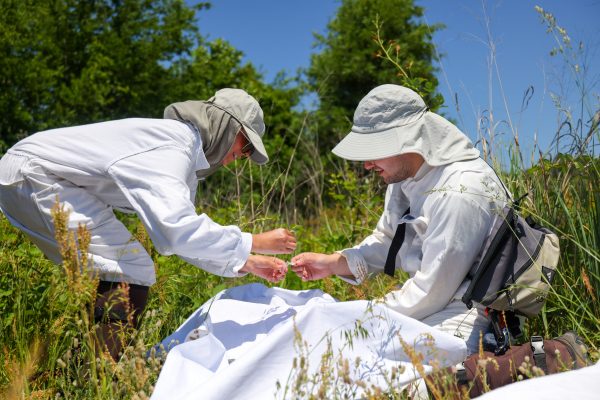
UNC Charlotte research team expands tick surveillance through field work and lab expertise to improve public health in Mecklenburg County
It’s 90 degrees in the open fields of Cowan’s Ford Wildlife Refuge in northwestern Mecklenburg County, North Carolina. All sun, no breeze. The students — on this day it’s one from public health, two from biology and one recent biology graduate — are hunched over scanning the grassland.
They are hunting ticks, parasitic arachnids about the size of apple seeds. Their hunting gear amounts to nothing more than a handmade flag — one square meter of white flannel attached to a wooden pole.
The students look like breadsticks poking out of a leafy, green salad as they gently sweep their flags back and forth across the foliage in hopes the ticks will attach to the fabric. This flagging method is one of the main ways to capture environmental ticks, which can’t jump or fly.
To find their prey, some tick species lie in wait until they sense body heat, breath or vibrations. When a potential host walks by, they reach out and stealthily connect. The victim doesn’t feel a thing. Read the full story …